Moving to Melbourne? How to Navigate Relocation Using Martha Beck’s Change Cycle
Relocating to Melbourne — whether you're moving house across town or arriving as an expat starting a new chapter — is a major life transition. As someone who has been an expat in Canada, Switzerland and Morocco - I know what it feels like to be completed detached from everyone you know and are comfortable with. It’s an exciting time of overwhelm, possibility, reinvention and eventually - smooth sailing.
On the surface, it’s logistics:
Removalists
Rentals or property purchases
Schools
New jobs
Setting up utilities
But underneath?
It’s identity, belonging, routine, community, and nervous system regulation.
As a life coach working with clients moving house in Melbourne and expats relocating to Australia, I see the same emotional pattern over and over. And it maps beautifully onto Martha Beck’s Change Cycle — a framework that explains why relocation can feel both exciting and destabilising at the same time.
If you’ve recently moved to Melbourne — or you’re planning a move — this guide will help you understand where you are in the change cycle and how to settle in with more ease.

The reality of moving - mountains of boxes and plants with books stacked up
Why Moving to Melbourne Is a Bigger Transition Than You Think
Melbourne is consistently ranked among the world’s most liveable cities. From the café culture of Carlton to beachside St Kilda, leafy Camberwell to vibrant Brunswick, there’s a pocket for everyone.
But even positive change is still change.
Whether you're:
An expat relocating to Melbourne from overseas
Moving interstate from Sydney or Brisbane
Downsizing after a separation
Upsizing for a growing family
Moving house within Melbourne
Your brain and body interpret change as uncertainty.
And uncertainty triggers stress.
That’s where understanding the Change Cycle becomes powerful.
What Is Martha Beck’s Change Cycle?
In her book Finding Your Own North Star, Martha Beck outlines four stages of major life change:
Death & Rebirth
Dreaming & Scheming
The Hero’s Saga
The Promised Land
Let’s explore how this applies specifically to moving to Melbourne.
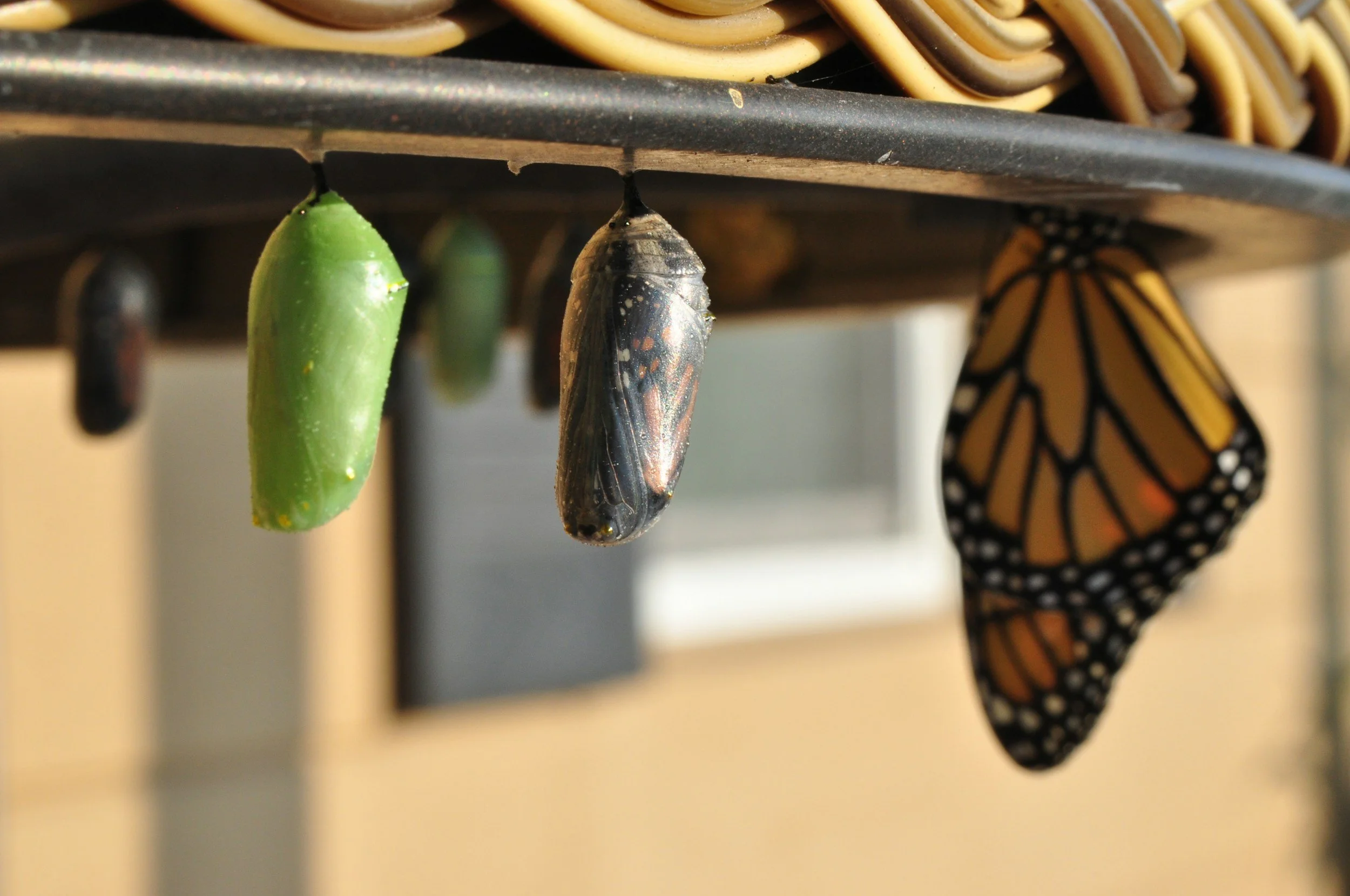
Change cycle shown through butterflies
Stage 1: Death & Rebirth (The Disorientation Stage)
This is the messy middle.
If you’ve just moved house in Melbourne or relocated from overseas, you might feel:
“Did we make the right decision?”
Overwhelmed by small tasks
Lonely, even if you’re surrounded by people
Disconnected from your usual routines
More emotional than usual
For expats especially, this stage can feel intense. You’re grieving your old grocery store, your morning walk, your support network — even the way things “used to be.”
This is completely normal.
Your identity was anchored to your previous environment. When you move, that anchor disappears.
You might have the heaviness and confusion of relocation stress in Melbourne, expat adjustment Australia, homesick after moving or being second guessing yourself... did you ruin your life? You don’t know you yet.
If this is you, you are not failing at settling in.
You are in Stage 1 of the Change Cycle.
And Stage 1 is about allowing disorientation, wrapping a blanket around it, bringing it a hot cut of tea and making space for it, feeling it — absolutely not fixing it.
Stage 2: Dreaming & Scheming (The Possibility Stage)
This stage often overlaps with the practical side of relocation.
You’re:
Exploring Melbourne suburbs
Trying new cafés
Looking at gyms or yoga studios
Researching schools
Visualising your “new life”
There’s excitement here.
This is the Pinterest board phase of relocation.
For interstate movers or expats, this stage often comes before the move — imagining your new Melbourne lifestyle.
But here’s the catch: if you rush past Stage 1 discomfort, Stage 2 can feel forced or performative.
The key question in this phase:
What do I want this next chapter to feel like?
Not just where do I live?
Not just what school?
Not just what job?
But:
Who am I becoming here?
What matters more now?
What am I leaving behind — intentionally?
Stage 3: The Hero’s Saga (The Adjustment and Action Stage)
This is where most people get stuck.
You’re:
Navigating public transport
Building new friendships
Managing work changes
Learning Melbourne’s rhythms
Going to events and networking to try and make connections
Possibly dealing with visa stress (for expats)
It’s effortful.
You don’t yet feel fully “at home.”
But you’re no longer brand new.
This is where resilience is built.
And this is where coaching can be transformative.
Because the Hero’s Saga asks:
What support do I need?
What habits will stabilise me?
Where am I resisting reality?
For Melbourne relocators, this might mean:
Joining local community groups
Finding a therapist or coach
Creating weekly rituals
Exploring neighbourhood markets
Volunteering
Belonging isn’t automatic.
It’s created.
Stage 4: The Promised Land (Integration & Polishing)
One day, you’ll realise:
Melbourne feels normal.
You have:
A favourite coffee spot
A trusted GP
Friends you text spontaneously
A rhythm to your weeks
The city stops feeling like “the new place.”
It becomes home.
But here’s the truth most relocation blogs don’t tell you:
You can’t skip to Stage 4.
You earn it by moving through the earlier stages consciously.

How to Find Your Own Location in the Change Cycle
The best part about the change cycle, is once you understand it- you can figure out where you sit on the change cycle for a particular area of life. You maybe be in a different square for one thing, and in another for something else.
If you’ve recently moved to Melbourne, ask yourself:
Am I grieving something? (Stage 1)
Am I imagining possibilities? (Stage 2)
Am I actively building my new life? (Stage 3)
Am I feeling settled and grounded? (Stage 4)
There is no “right” speed.
Expats may cycle through stages multiple times.
Families may be in different stages simultaneously.
Couples often move through transition differently.
Understanding your stage reduces self-judgment.
Why Expats in Melbourne Experience the Change Cycle Differently
If you’re an expat relocating to Melbourne, your transition includes:
Cultural adjustment
Visa pressure
Distance from family
Identity shifts
Career re-establishment
You’re not just moving house.
You’re rebuilding life infrastructure.
Which means Stage 1 can last longer.
And Stage 3 requires more intentional support.
But Melbourne is uniquely supportive for expats — diverse communities, global cuisine, international schools, and established migrant networks.
Belonging takes time — but it’s absolutely possible.
Practical Ways to Move Through Change More Smoothly
Whether you’re moving house within Melbourne or relocating from overseas:
1. Normalise Emotional Whiplash
Excitement and grief can co-exist.
2. Create Micro-Stability
Same morning routine.
Same supermarket.
Same Sunday ritual.
3. Seek Community Before You Feel Ready
Belonging is built through repetition.
4. Work With a Transition Coach
Relocation is one of the top life stressors. Support shortens the stress curve.
Moving to Melbourne Is an Identity Shift — Not Just an Address Change
Most relocation advice focuses on logistics.
But the deeper question is:
Who are you becoming in Melbourne?
The Change Cycle reminds us that growth is not linear.
Discomfort is not failure.
And feeling lost is often the beginning of realignment.
If you’re in the messy middle of relocation, you’re not behind.
You’re transforming.
Ready to Settle in Melbourne With More Ease?
If you’re:
An expat adjusting to life in Melbourne
A family navigating a big move
A professional relocating for work
Or simply feeling unsettled after moving house
I specialise in helping people move through life transitions and change with clarity and confidence.
You don’t have to navigate this change alone.
Visit lifecoachjilly.com or just submit a query for your first coaching conversation and discover where you are in your change cycle — and how to move forward grounded and empowered. You deserve the support for this next chapter, instead of just ‘getting through’ - you can actually enjoy and flourish in this new life.

Life coach Melbourne. Jilly in Montreal
