The Five Life Experiences That Shaped Me as a Coach
Life coach jilly - Melbourne Australia.
(And Why They Matter If You’re Standing at the Edge of Change)
When people look for a life coach — especially during a big life transition — they’re not just looking for qualifications.
They’re looking for steadiness.
For someone who understands risk.
For someone who has walked through uncertainty and come out grounded.
My coaching is not built on theory alone, though I am absolutely credentialed by the International Coaching Federation.
It’s shaped by lived experience — navigating career change, financial pressure, cultural reinvention, identity shifts, and creative reclamation.
If you’re facing change — a move, a reinvention, a career pivot, burnout, relocation, or simply a quiet sense that your life no longer fits — these experiences may resonate.
And more importantly, they may show you that change doesn’t require panic.
It requires self-trust.

Me (Life coach jilly) sitting on a park bench in Montreal (Mount Royal) Canada. Photo Credit Yoga Brian Purnell @brianstorm
1. Leaving Stability to Follow Alignment
For five years, I worked in a stable corporate role.
On paper, it looked secure.
Successful.
Responsible.
But internally, something felt increasingly misaligned.
Leaving meant confronting very real fears:
Financial uncertainty
Identity loss
“What will people think?”
Letting go of a version of success that once felt important
This wasn’t an impulsive decision. It was considered, slow, and uncomfortable.
What I learned was this:
Safety and self-worth often become entangled.
We tell ourselves:
“If I leave, I’m irresponsible.”
“If I change, step side ways or backwards, I’m failing.”
“If I want more, I’m ungrateful.”
But sometimes the greater risk is staying.
This experience now allows me to support clients navigating:
Career change
Corporate burnout
Purpose realignment
Major life pivots
Reinvention after success
Stepping into creativity
Starting their own business
Not from inspiration alone — but from lived risk literacy.

2. Paying Off Debt and Redefining My Relationship with Money
There was a period of my life where I carried significant consumer and education debt - around $25K. I wondered who I would at $0, or even the other side of that debt in savings like $25K. I decided when travelling overseas to sell my car and just pay off the debt, and I realised once I made that transfer, that I wasn’t a ‘better person’ by any means, I was just a less stressed person, and I really love that free feeling.
Paying it off wasn’t just a financial milestone — it was psychological.
At the time, holding onto money felt safer than releasing it.
Even when releasing it meant freedom.
What I discovered was that money fear quietly shapes decision-making:
Staying in jobs too long
Avoiding opportunities
Undervaluing skills
Saying no to growth
Money is rarely just numbers.
It’s identity.
Security.
Control.
Fear.
Power.
This experience gave me embodied understanding of:
Financial anxiety
Risk tolerance
Scarcity mindset
Decision-making under pressure
Many of my clients are navigating:
Career transitions
Relocation
Divorce
Business launches
Midlife reinvention
And money anxiety is almost always present beneath the surface.
Because I’ve navigated it personally, I hold those conversations calmly — without shame or urgency.

3. Living and Working Overseas and Travelling Across 11 Countries
I’ve lived and worked internationally — including in Morocco, Switzerland, and Canada — and travelled for fun across 11 countries in total.
Repeatedly becoming “new” does something to your identity.
You lose:
Familiar status
Language fluency
Cultural cues
Social anchors
You gain:
Adaptability
Perspective
Cultural humility
Self-trust
Living abroad taught me how destabilising transition can be — especially for expats and professionals relocating for work.
It also taught me that identity is more flexible than we think.
Navigating:
Cultural power dynamics
Gender inequality
Professional reinvention
Language barriers
Loneliness in unfamiliar cities
Deepened my ability to support clients through:
Relocation
Expat adjustment
Identity shifts
Starting over in a new city
Reinvention after loss
Repeatedly becoming “the outsider” built emotional resilience — and compassion.
It also mirrors the early stages of Martha Beck’s Change Cycle — particularly the “Death & Rebirth” stage, where old identities dissolve before new ones stabilise.
I know what it feels like to not know who you are in a new environment.
And I know how to rebuild from there.

4. Choosing Courage Without Guarantees
Not all transformation comes through structured change.
Some comes through instinct.
Over the years, I’ve said yes to experiences without full information:
Crossing continents to USA after buying a festival ticket
Going on a two year Working Holiday in Canada, and then also finding work in Switzerland and Morocco where I learnt to surf and ski.
Performing stand-up comedy in a foreign country
Running a marathon
Travelling to 11 countries, mostly solo
Walking the Camino de Santiago alone.
Leaving a good long term relationship that was not sustainable for the future.
These weren’t reckless.
They were intentional stretches.
And what I learned was this:
Clarity often follows action — not the other way around.
Many people wait for certainty before moving.
But certainty rarely arrives first.
What builds confidence is evidence.
Taking the step.
Surviving it.
Learning from it.
This is central to how I coach.
When clients feel paralysed at the edge of change, we don’t force leaps.
We create safe experiments. Successful experiments, create evidence and build up that courage muscles to make bigger change.
Movement reduces anxiety. Action builds you a new identity.

Two dice thrown in - what if you lived life with the throw of the die? We only have one wild and precious life, don’t gamble it away- but definitely don’t shy away from playing with possibilities.
5. Reclaiming Creativity as a Way of Knowing Myself
For years, I encouraged creativity in others.
But I sidelined my own.
Returning to music, movement, art, and creative expression wasn’t about performance.
It was about reconnection.
Creativity is not a hobby.
It’s a form of self expression and authenticity.
When we disconnect from creativity, we often disconnect from intuition.
Reclaiming creativity reshaped:
How I make decisions
How I process emotion
How I experience self-trust
How I define success
Many high-achieving professionals feel disconnected from their inner voice.
They are competent.
Capable.
Successful.
But not fully expressed.
This experience allows me to support:
Creatives who feel blocked
Professionals craving reinvention
People at midlife questioning identity
Individuals rediscovering joy after burnout
Because I understand what it feels like to quietly lose yourself — and consciously return.

An artists studio - how does this make you feel when you see stacked up paint brushed and art?
What These Experiences Mean for My Clients
These five experiences share a theme:
Standing at the edge of change without guarantees.
If you’re here, you may be:
Considering leaving a job
Relocating to a new city
Questioning a long-term relationship
Paying off debt and rebuilding financially
Navigating expat life
Recovering from burnout
Reclaiming creativity
Reinventing your identity in midlife
Changing careers
Starting your own business
Change doesn’t require bravado.
It requires:
Emotional regulation
Clear thinking
Risk literacy
Self-compassion
Support
And most importantly — self-trust.
Where Are You in Your Own Change Cycle?
According to Martha Beck’s framework, change moves through stages:
Disorientation
Possibility
Effortful rebuilding
Integration
Most people assume discomfort means they’re failing.
In reality, it often means they’re transforming.
The question isn’t:
“Why is this so hard?”
The question is:
“Where am I in the process?”
When you understand your stage, you reduce panic.
When you reduce panic, you make better decisions.
Stay grounded
My coaching is grounded in lived experience — navigating risk, money, identity, reinvention, and creativity — not theory alone.
I work with people who are standing at the edge of change and want to move forward with clarity, safety, and self-trust.
If you’re in transition — career, relocation, reinvention, or identity shift — you don’t need more pressure.
You need steadiness.
You need perspective.
You need someone who understands both the fear and the possibility.
Ready to Move Forward Without Panic?
If this resonates, I invite you to explore what working together could look like.
Visit lifecoachjilly.com or make a query to schedule an introduction coaching conversation and discover:
Where you are in your transition
What’s keeping you stuck
What your next grounded step might be
Change doesn’t have to feel chaotic.
It can feel conscious.
And it can feel like you.
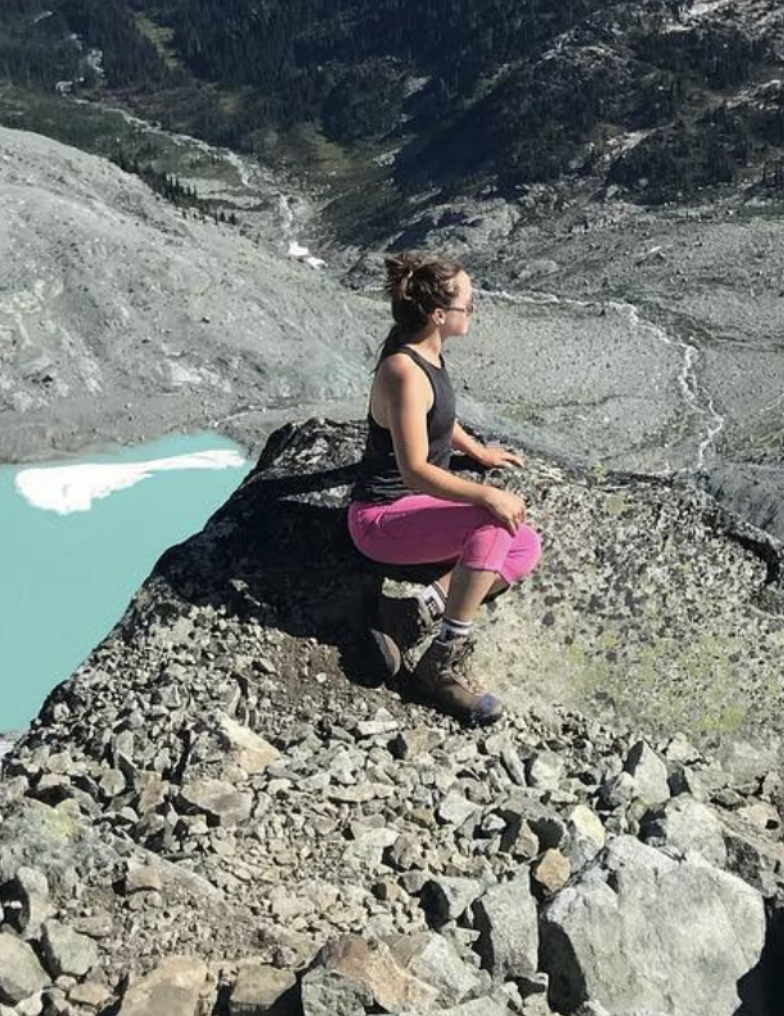
Me in Canada on a gorgeous hike in the mountains with glacial lakes.
